Nara Park
3 Spots
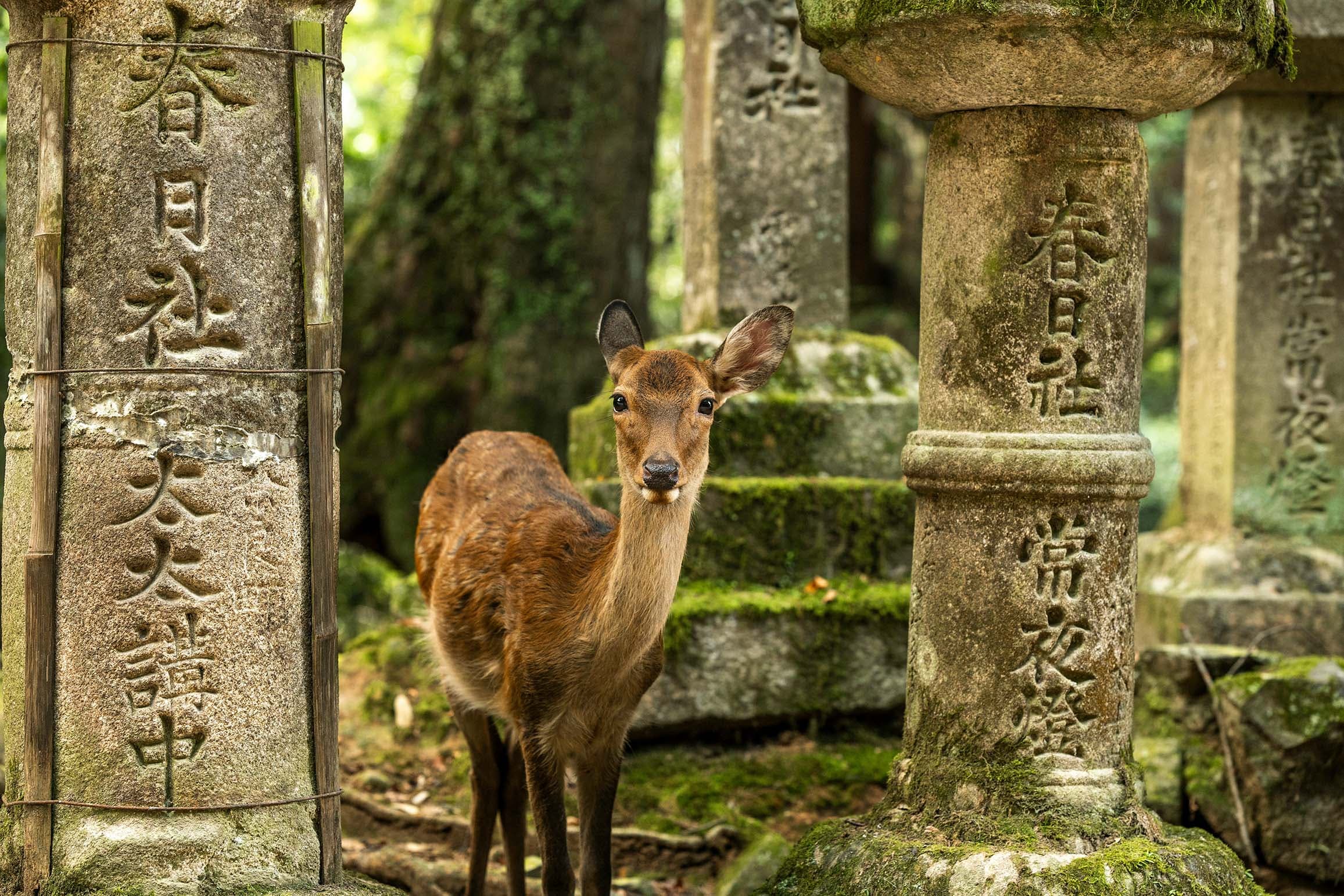
Nara Park is a vast, open parkland in Japan's first permanent capital, where over 1,200 wild deer roam freely among ancient temples, shrines, and manicured lawns. Designated a national natural monument, these sacred deer have been regarded as divine messengers for over a millennium and will bow politely if you offer them the special shika-senbei deer crackers sold throughout the park.
The park connects several of Japan's most significant cultural sites within walking distance: the colossal Great Buddha at Todai-ji, the lantern-lined pathways of Kasuga Taisha, and the landscaped gardens of Isuien. As an easy day trip from Kyoto or Osaka (both under 50 minutes by train), Nara offers a uniquely intimate encounter with Japan's ancient past — minus the overwhelming crowds of its larger neighbours.
Info
Spot Rankings
Spots in this Area
Todai-ji Temple
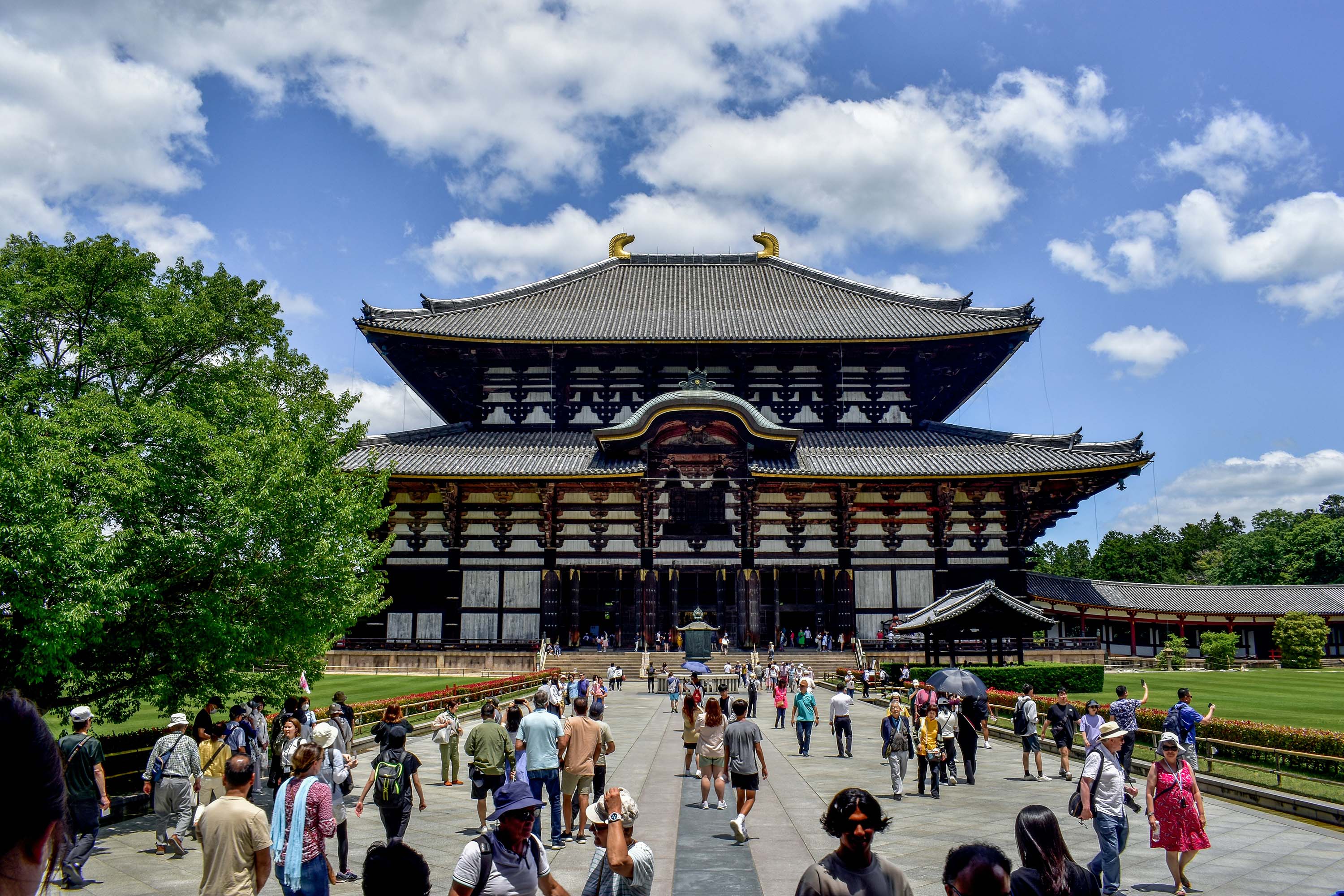
Todai-ji houses the world's largest bronze Buddha — the Daibutsu — a 15-metre-tall, 500-ton statue that has watched over Nara since 752 CE. The Great Buddha Hall (Daibutsuden) that shelters it is the world's largest wooden building, despite being only two-thirds the size of the original 8th-century structure destroyed by fire. Inside the dim, incense-scented hall, the sheer scale of the seated Buddha takes your breath away. A pillar near the back has a hole at its base the same diameter as the Buddha's nostril — squeezing through is said to guarantee enlightenment. Outside, deer graze peacefully on the approach path, completing a scene that has changed remarkably little in 1,300 years.
Nara Park Grounds
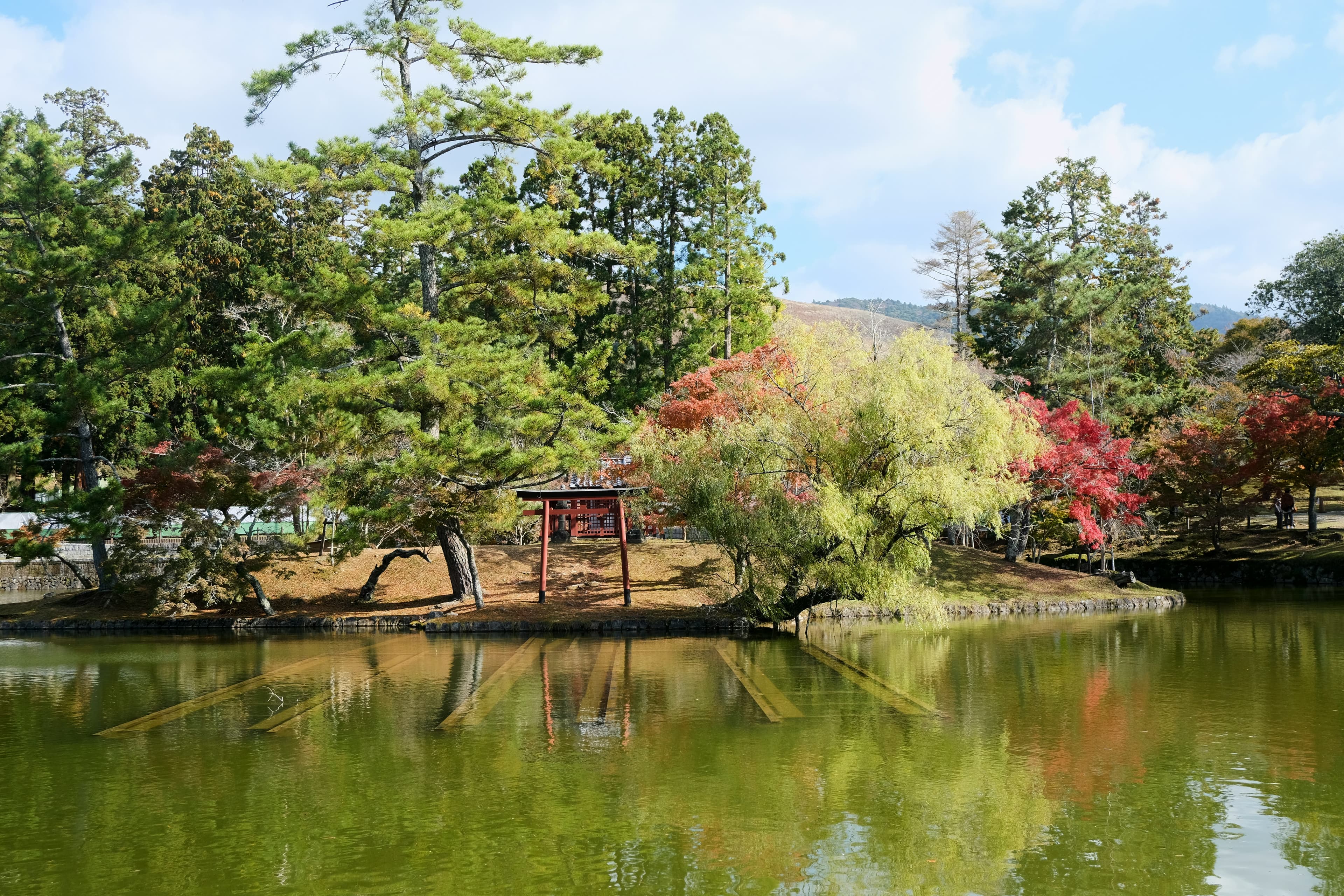
The open lawns and woodland paths of Nara Park stretch across 660 hectares, creating one of Japan's most extraordinary urban landscapes — one where wild deer outnumber tourists on quiet mornings. The park itself is unenclosed and free to enter at any time, with gentle slopes and shaded groves perfect for picnics, photography, and simply watching deer bow for crackers. Key highlights include the Tobihino meadow, where hundreds of deer gather against a backdrop of autumn foliage, and the Ukigumo Garden with its reflective pond. The park seamlessly connects Todai-ji, Kasuga Taisha, and the Nara National Museum, making it both a destination and a beautiful transit corridor between major sights.
Kasuga Taisha Shrine
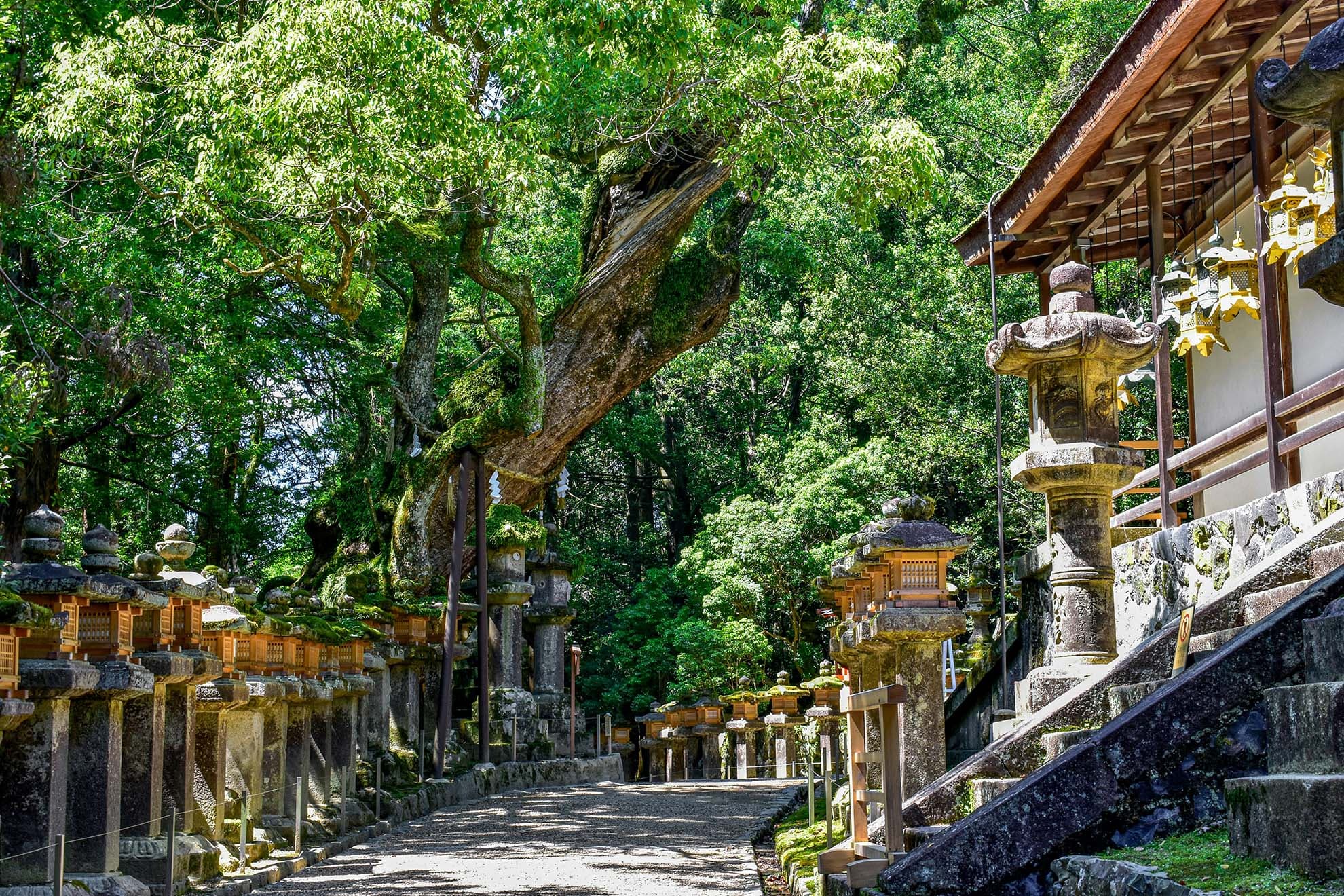
Kasuga Taisha, founded in 768 CE, is Nara's most celebrated Shinto shrine and a UNESCO World Heritage site. Its approach through the primeval Kasugayama Forest — a sacred grove untouched for over a millennium — is lined with nearly 3,000 stone and bronze lanterns donated by worshippers over the centuries. During the Mantoro lantern festivals (February 3 and August 14-15), all lanterns are lit simultaneously, creating a corridor of flickering light. The shrine's main buildings are painted in striking vermilion, a vivid contrast to the deep green of the surrounding forest. Wisteria vines drape over the grounds in late April and early May, adding cascades of purple and white. The Kasuga tradition of rebuilding the shrine every 20 years (similar to Ise Jingu) maintained for centuries ensures the structures remain perpetually fresh.